Toshimitsu Imai (1928–2002) was a Japanese painter born in Kyoto Prefecture who played an important role in the development of postwar abstract art in Japan and France. He studied oil painting at Tokyo University of the Arts in 1950 and moved to France in 1952. In Paris, he became acquainted with artists such as Sam Francis and the art critic Michel Tapié, and participated in the avant-garde art movement known as Art Informel, which emerged in Europe during the 1950s.
Art Informel was an abstract art movement that emphasized the texture of paint, spontaneous brushwork, and chance effects rather than clearly defined forms or traditional compositions. Imai developed his own distinctive style of abstraction through thick layers of paint, expressive brushstrokes, and vivid colors. In 1957, he visited Japan with Michel Tapié and others, playing a significant role in introducing Art Informel to Japanese audiences.
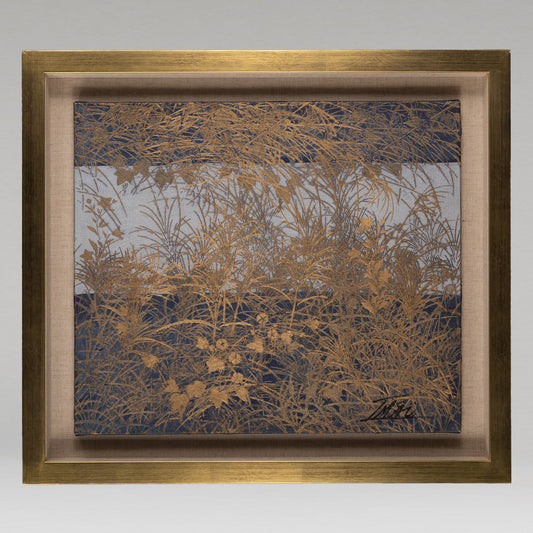
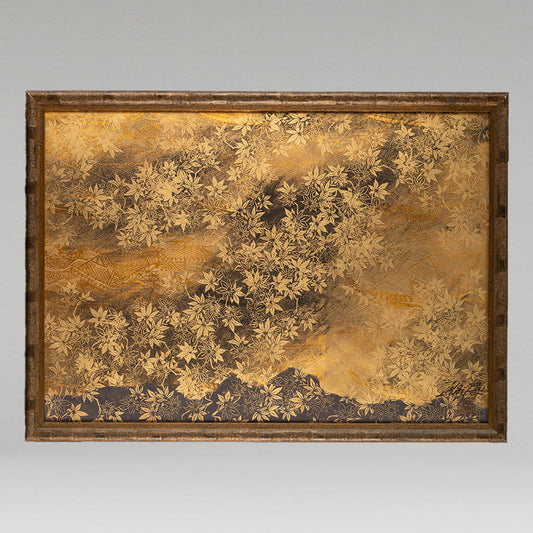
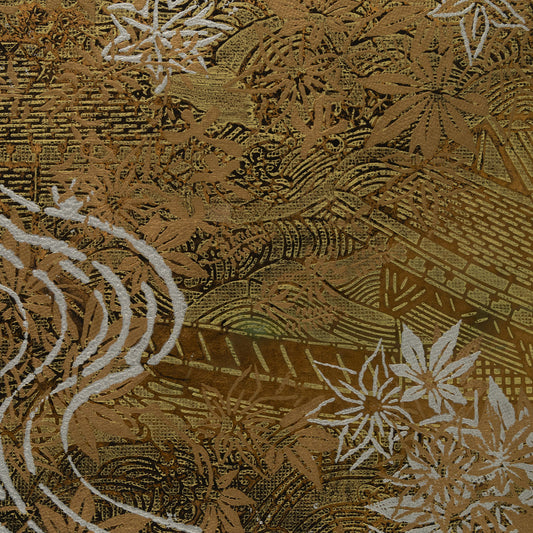
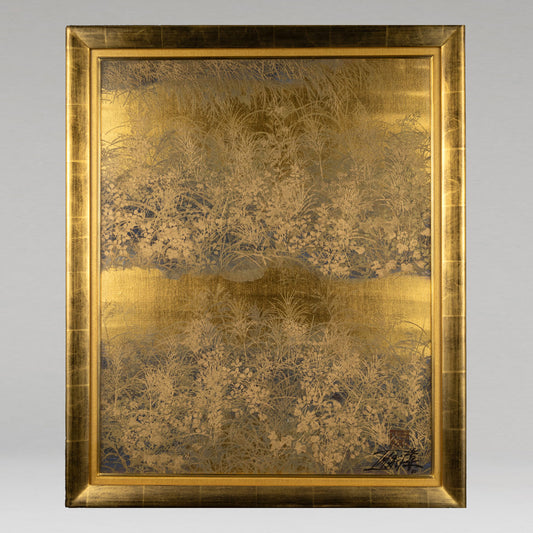
Imai continued to develop his international career, exhibiting at the Venice Biennale in 1960. During the 1980s, his artistic style underwent a major transformation as he moved away from his earlier abstract expression and began creating the Kachō Fūgetsu (Flowers, Birds, Wind, and Moon) series, incorporating traditional Japanese aesthetics. Featuring flowers, birds, and natural landscapes, these works explored new forms of expression through brilliant colors and decorative compositions reminiscent of the Rinpa school.
In the 1990s, he also produced works addressing the atomic bombings and war, including his Hiroshima and Nagasaki series. He was awarded the French Legion of Honour in 1995 and appointed Commander of the French Order of Arts and Letters in 1997. Throughout his career, Imai continually transformed his artistic approach, developing a distinctive body of work that connected Japanese and Western artistic traditions.
His works are held in major Japanese museum collections, including the National Museum of Modern Art, Tokyo, the National Museum of Modern Art, Kyoto, and the National Museum of Art, Osaka.